+86 0371-69392107 Info@synthe-corp.com Request a Quote
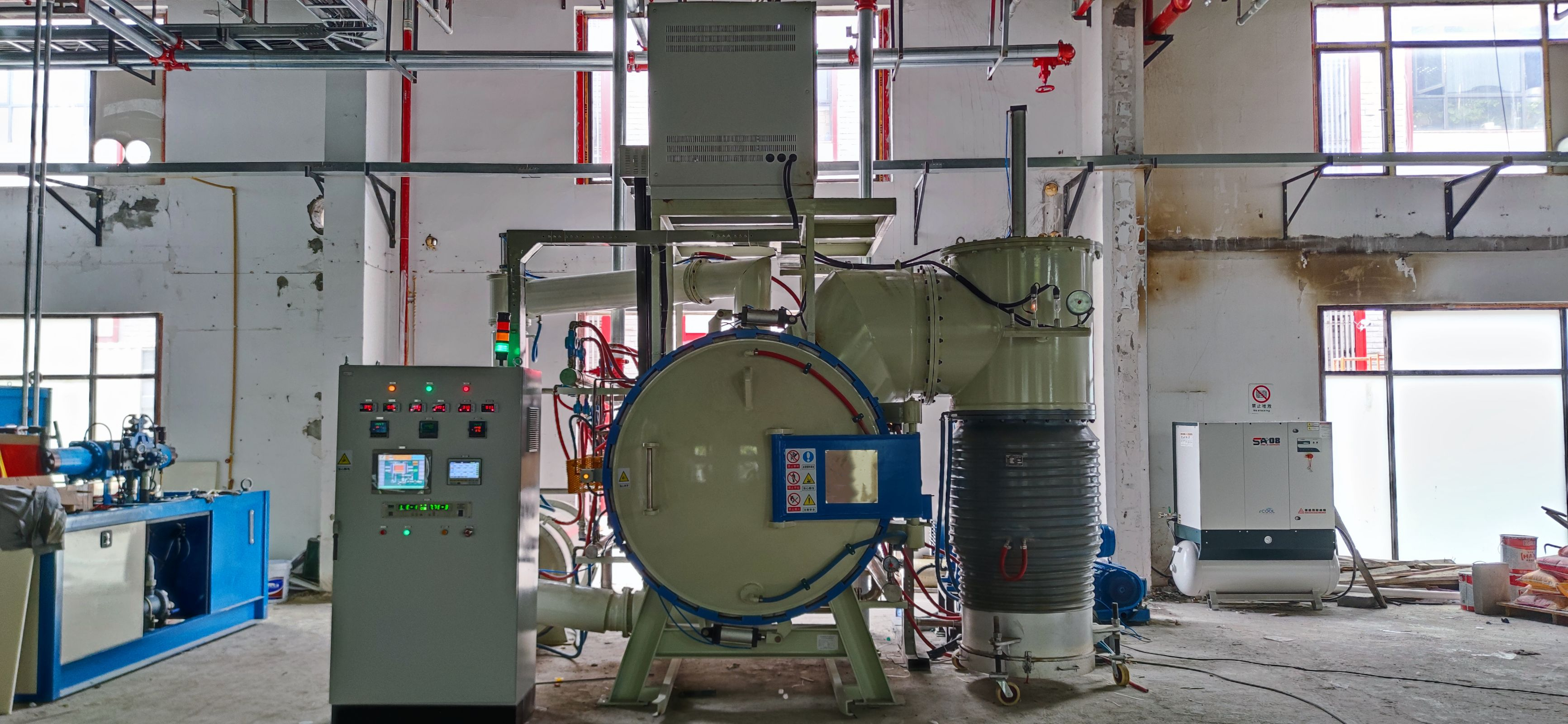
Overview of Vacuum Sintering Furnace
1. All-round safety protection
2.Precise temperature control
3.Intelligent process control system
Full process automation: the computer system presets 30+ kinds of process curves and supports one-key call for parameters such as heating rate, holding time, cooling gradient, etc., which is suitable for the differentiated sintering needs of metal powder, MIM products, ceramics and other materials.
Precise switching of dual-temperature section: low-temperature section (≤1300℃) adopts silicon molybdenum rod to control temperature, and high-temperature section (1300-2200℃) automatically switches to molybdenum/graphite heaters, with temperature control accuracy ±1℃ and furnace temperature uniformity ±5℃.
4.Ultra-high temperature vacuum performance
Limit temperature and vacuum: the maximum working temperature of 2200 ℃, cold limit vacuum up to 4 × 10-³Pa, pressure rise rate of ≤ 0.5Pa / h, to ensure an oxygen-free environment to eliminate the material oxidation, densification is enhanced to more than 99.5%.
Double safety guarantee: Equipped with 16 real-time monitoring modules (temperature, vacuum, water-cooled flow, etc.), automatically activate sound and light alarms and emergency shutdown protection when triggering abnormalities.
5. Modular expansion design
Optional function upgrade: optional dewaxing module (degreasing rate ≥98%), hot pressure system (pressurised to 100MPa), to meet the demand for integrated moulding of special materials such as cemented carbide and super-hard ceramics.
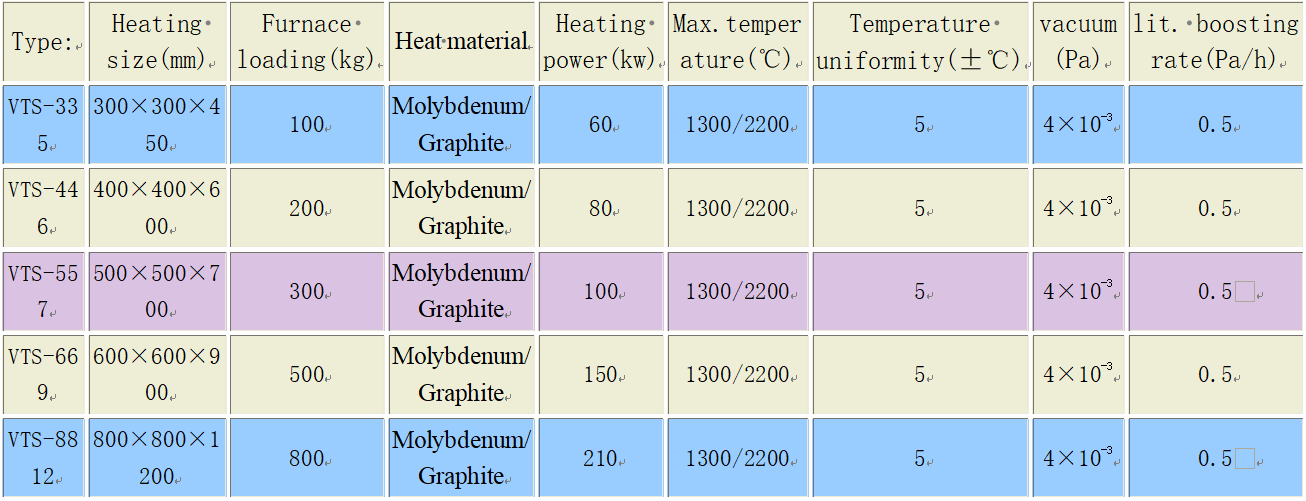
Technical Parameters and Selection Comparison Table
Industry Application Scenarios
1. Metal powder and MIM products
Technical value: porosity ≤0.1%, tensile strength ≥900MPa, ISO 10993 biocompatibility certification35.
2. Cemented carbide and superhard materials
Technical value: hardness HRA92+, cutting life increased by 300%, machining cost reduced by 40%.
3. New energy and optoelectronic materials
Application examples: solid-state battery electrolyte sheet sintering.
Technical value: Density ≥98%, ionic conductivity increased to 1×10-³ S/cm, helping the battery energy density exceed 500Wh/kg.